Hello everyone! The extremely overheated climate continues in July and August! The temperatures all over Japan reach over 35℃, even in the Hokkaido area, the northern island of Japan. There used to be a place called the “Summer Resort” where we could escape from Japan’s peculiar heat and humidity, but that is an old story. It can be hotter there than in Tokyo because the air conditioning in the buildings hasn’t been fully equipped. If you can escape the heat and humidity of the country, the mountain peaks are a good option!
I decided to join the trekking tour of the Tateyama mountain range for 3 days in August. Actually, I had planned to come to the Tateyama area a few years ago. The reason why I chose it was that my mother, who is now deceased, used to climb mountains very often and she recommended that I visit there. However, various inconveniences happened somehow, including COVID-19, which made it difficult for me to go until now. Then, the time has finally come to do it this time! (FYI, I went to Kagami-Daira Mountain Lodge in the Northern Alps last autumn. It was a really challenging climb for me, but at the same time, the view from the high mountain was breathtaking! The details are here.)
Tateyama Is over 3,000m Mountain Range in The Northan Alps
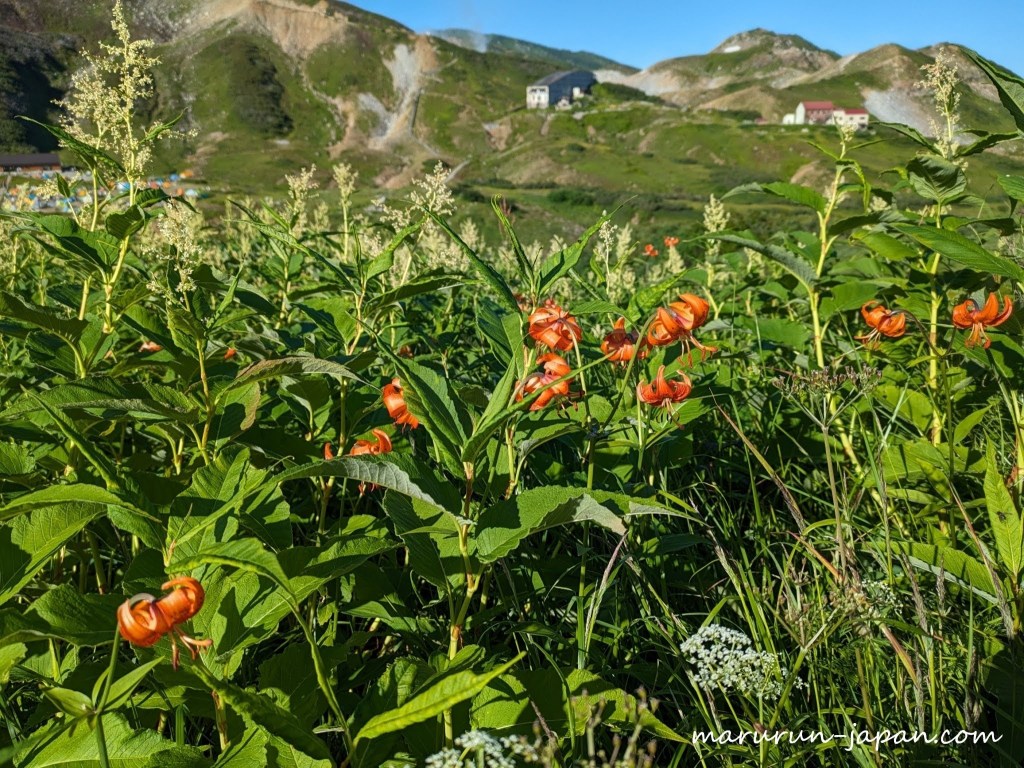
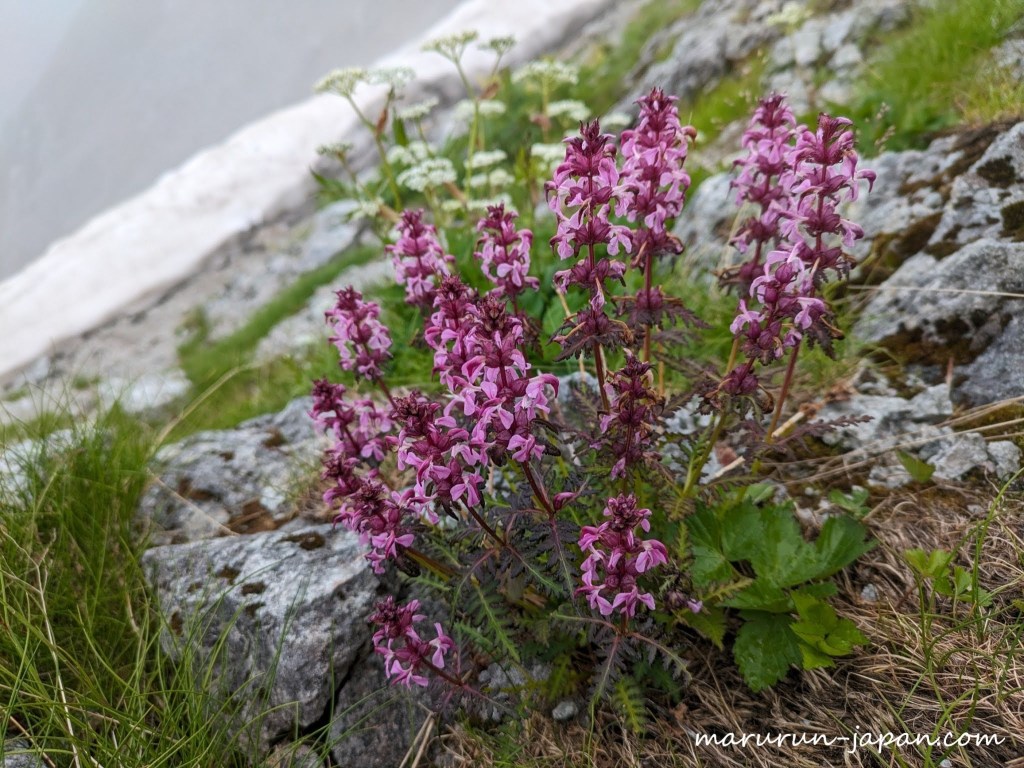
You may have heard of the “Tateyama Kurobe Alpine Route“, which is one of the famous mountain sightseeing routes in Japan. Mt. Tateyama is located in Toyama Prefecture, in the Northern Alps (see the map below). Mt. Tateyama is not actually a single mountain; it is the collective name for three mountains: Mt. Oyama (3,003m), Mt. Onanji (3,015m), and Mt. Fuji-no-oritate (2,999m). You can access the gateway of the mountain range called Murodo from both sides of Toyama and Nagano prefectures by various means such as trains, ropeways, buses, and cable cars. The area is always popular among hikers and travelers, especially in summer, so many people come together to climb the mountains to see lots of alpine plants/flowers and to seek coolness.
Our tour itinerary this time is to traverse these 3 mountains in addition to Mt. Masagodake (2,861m) and Mt. Bessan (2,880m) while staying in 2 different mountain huts. Please refer to the map here. The tour members consisted of 16 people, including 2 mountaineering guides, and all members participated solo. You may hesitate to join the tour alone, but a tour is convenient if you don’t have a car or are afraid of climbing alone when you can’t find buddies to climb with. Actually, we hit it off right away, even though it was the first time we met each other.
OMG, Acclimating to Altitude Doesn’t Work Well
On the first day, our schedule was slow and easy. We arrived at the gate, the Murodo area, by tour bus from Tokyo, after almost 8 hours. It was 3:30 p.m. when we got off the bus and started walking. The mountain scenery was so beautiful, like paintings, and I was so excited to walk to the first day’s mountain hut, Ichinokochi-Sanso. However, the climb to the mountain hut was surprisingly hard and my legs didn’t move very well. Breathing heavily, I found myself at the back of the line, behind everyone else.


Even if you don’t climb the mountain, you can take a light walk here.
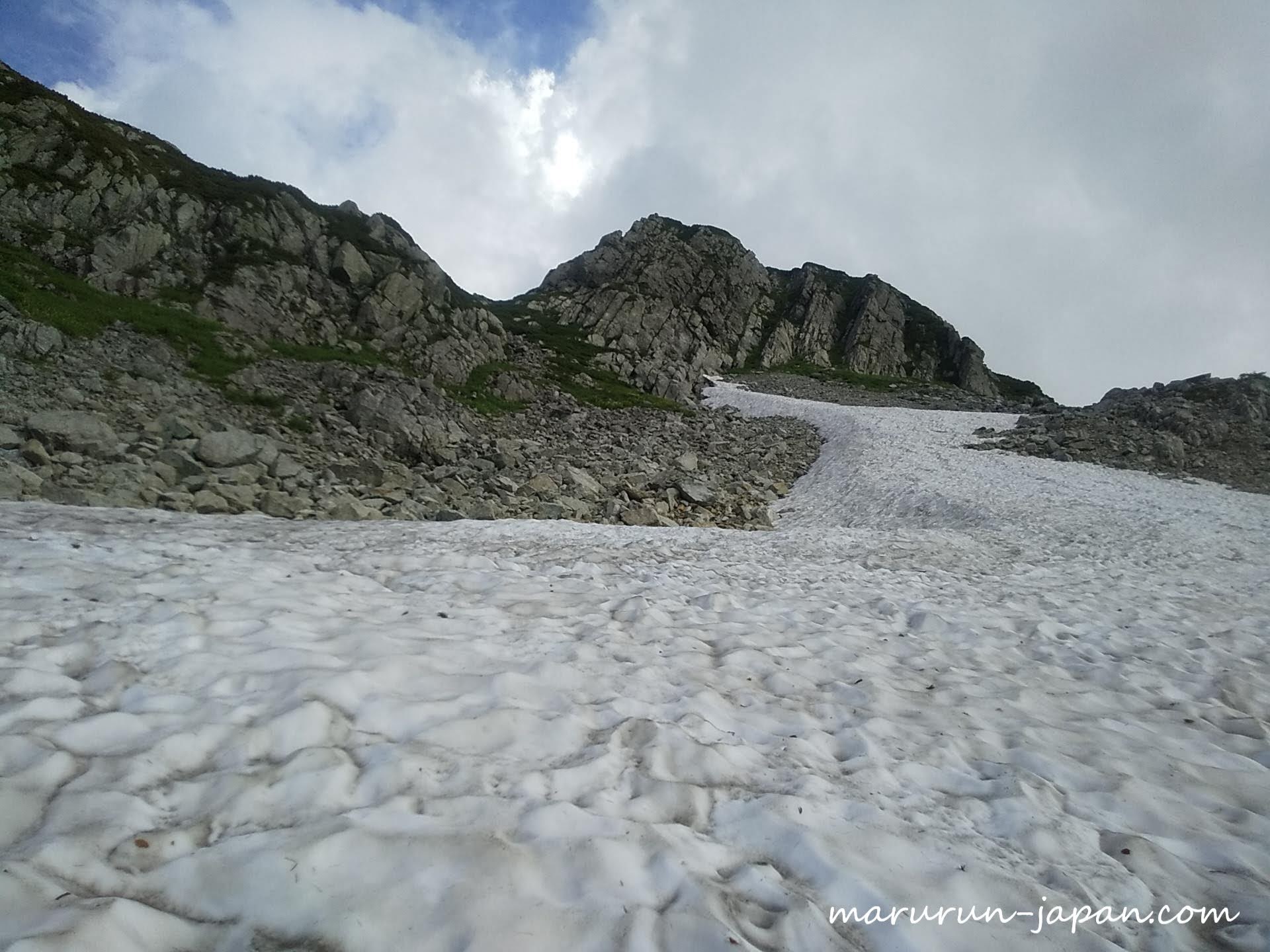
We finally got there one hour later, but I felt my head and body spinning. I completely lost my appetite, and my head continued to shake when we ate dinner in the dining room. According to the mountain guide, it meant that my symptoms were one step ahead of altitude sickness or that my body was in the process of acclimatizing to the altitude. If you have headaches or nausea, all you can do is go down the mountain to recover. If You have the same symptoms as I did, the mountain guide advised me not to go to bed right away, but to stay awake until lights out and continue to take deep breaths so that our body can gradually adjust to the altitude. I used the time to see the sky with the sunset and the huge number of stars for a few hours until lights out, and surely, my head shaking had disappeared. It was almost the first time and it suddenly went up to almost 3000m, so my body must have been surprised. I was also curious about how sensitive the human body is. At the same time, I fully realized the importance of adaptation and acclimatization through time and training.
A shrine in such a place!
On the 2nd day, we woke up around 4:30 a.m. and watched the spectacular sunrise from the outside of the hut. For the climbers who had a hard time getting there, the view must be a great gift to share. After breakfast at 6:00 a.m., we left the hut and immediately challenged to go up the hardest rocky area of the day for 90 minutes. The building at the top of the mountain was in sight, but it was not approaching. We went slowly step by step, taking short breaks. Finally, we reached the top of the 1st mountain of the day; Mt.Oyama!
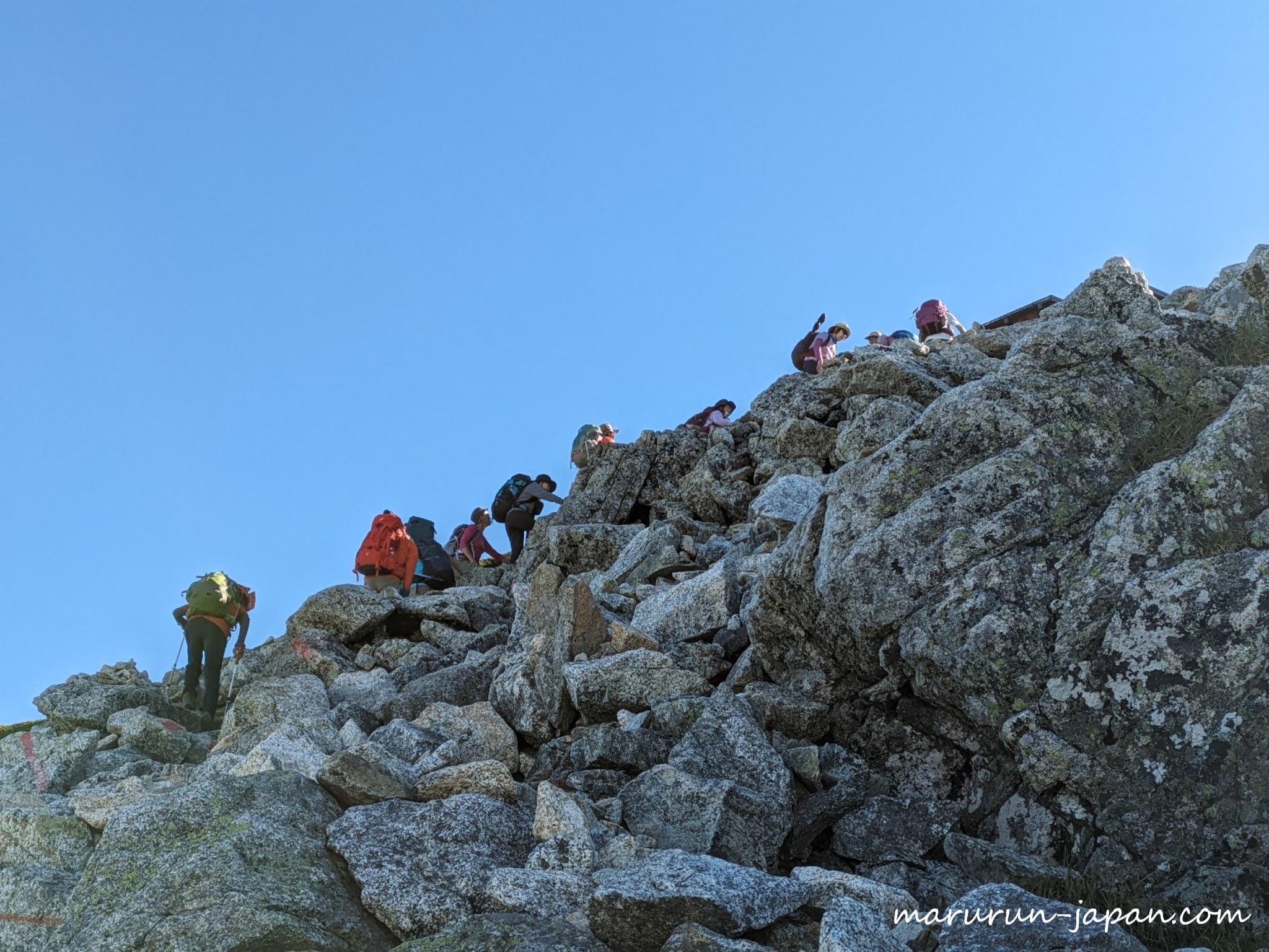
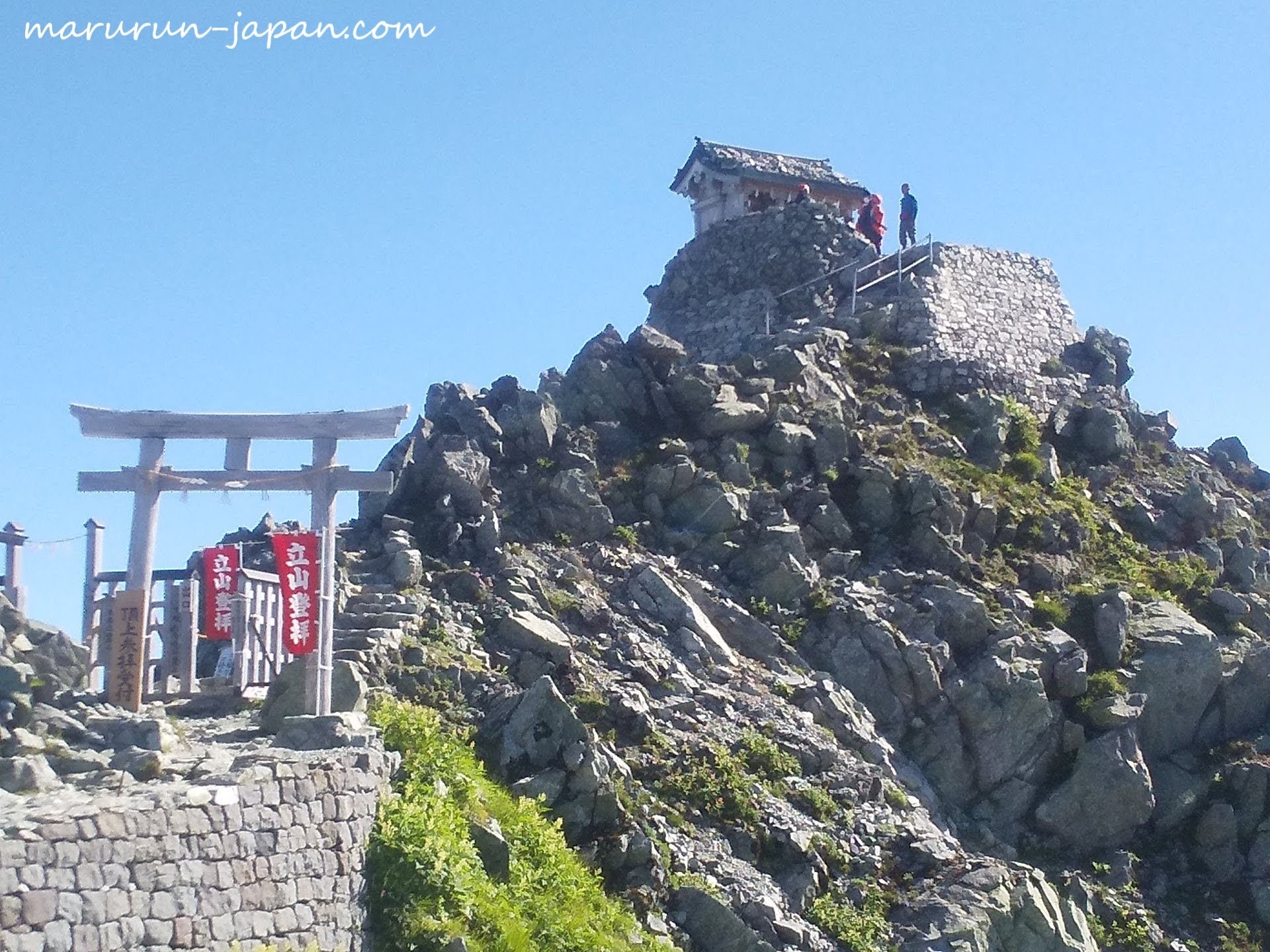
You might be surprised to know that we have a shrine there. Mt. Oyama is one of the three spiritual mountains in Japan, along with Mt. Fuji and Mt. Hakusan, and the shrine is located at 3,003 meters, so it is the shrine above the clouds. All the tour members gathered in front of the narrow shrine and received prayers from the Shinto priest under the blue sky. What was interesting was the three cheers all together somehow. Normally, we rarely do this at a shrine. I heard that the shrine used to offer a small glass of sake to visitors before COVID-19, but they changed the custom because of the spread of the virus. Personally, the new custom is better because I am an infrequent drinker 🙂

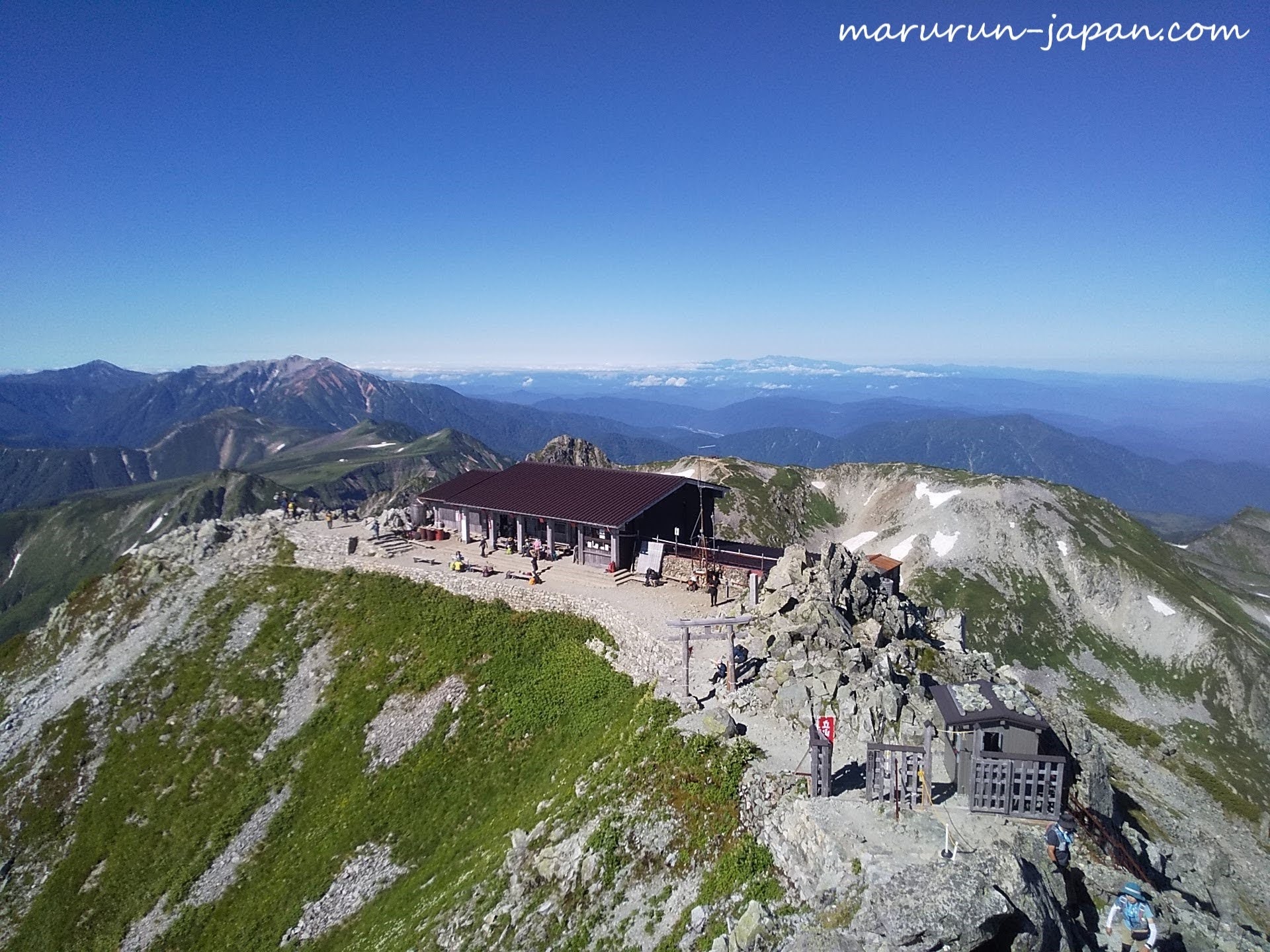
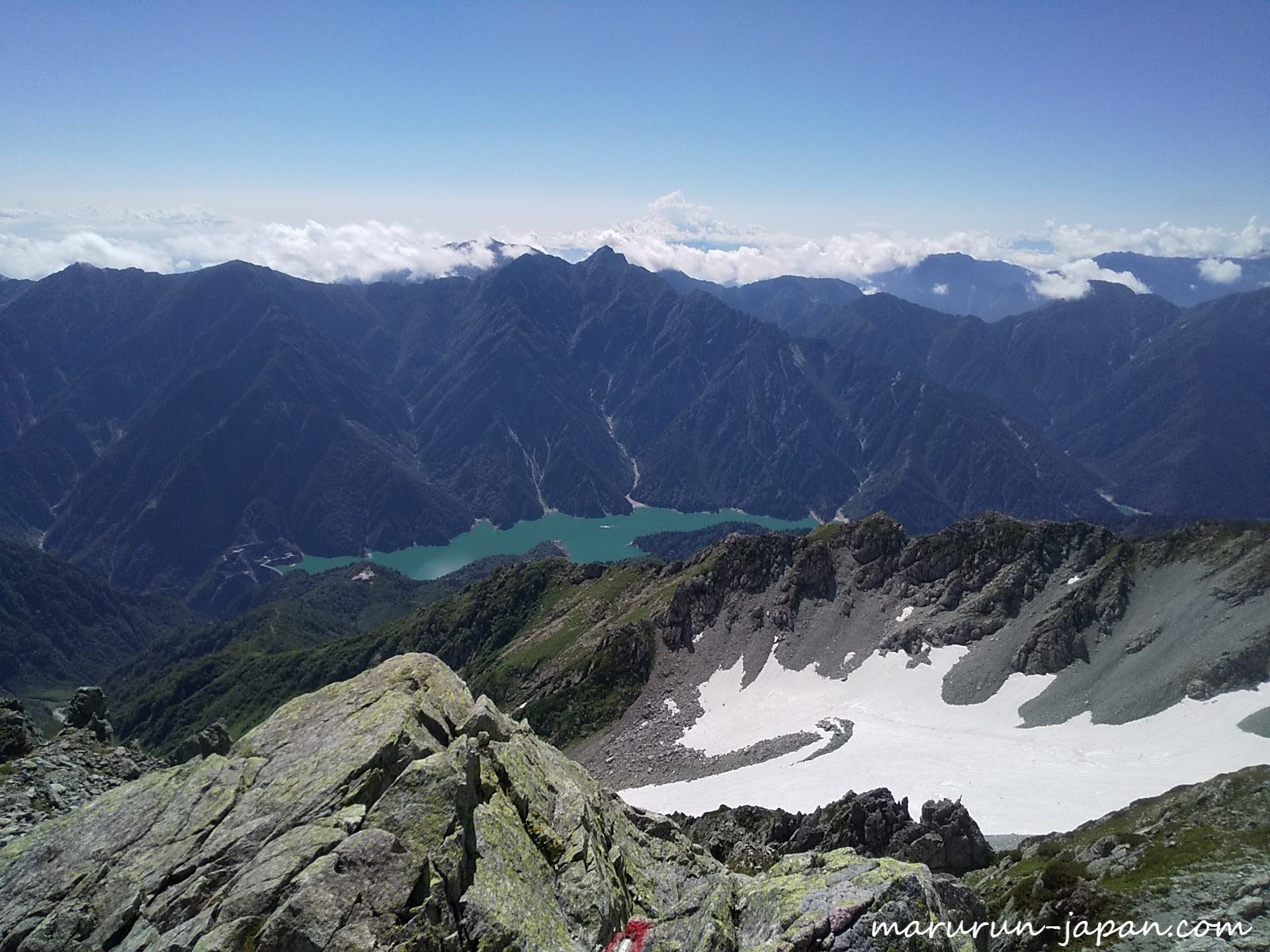
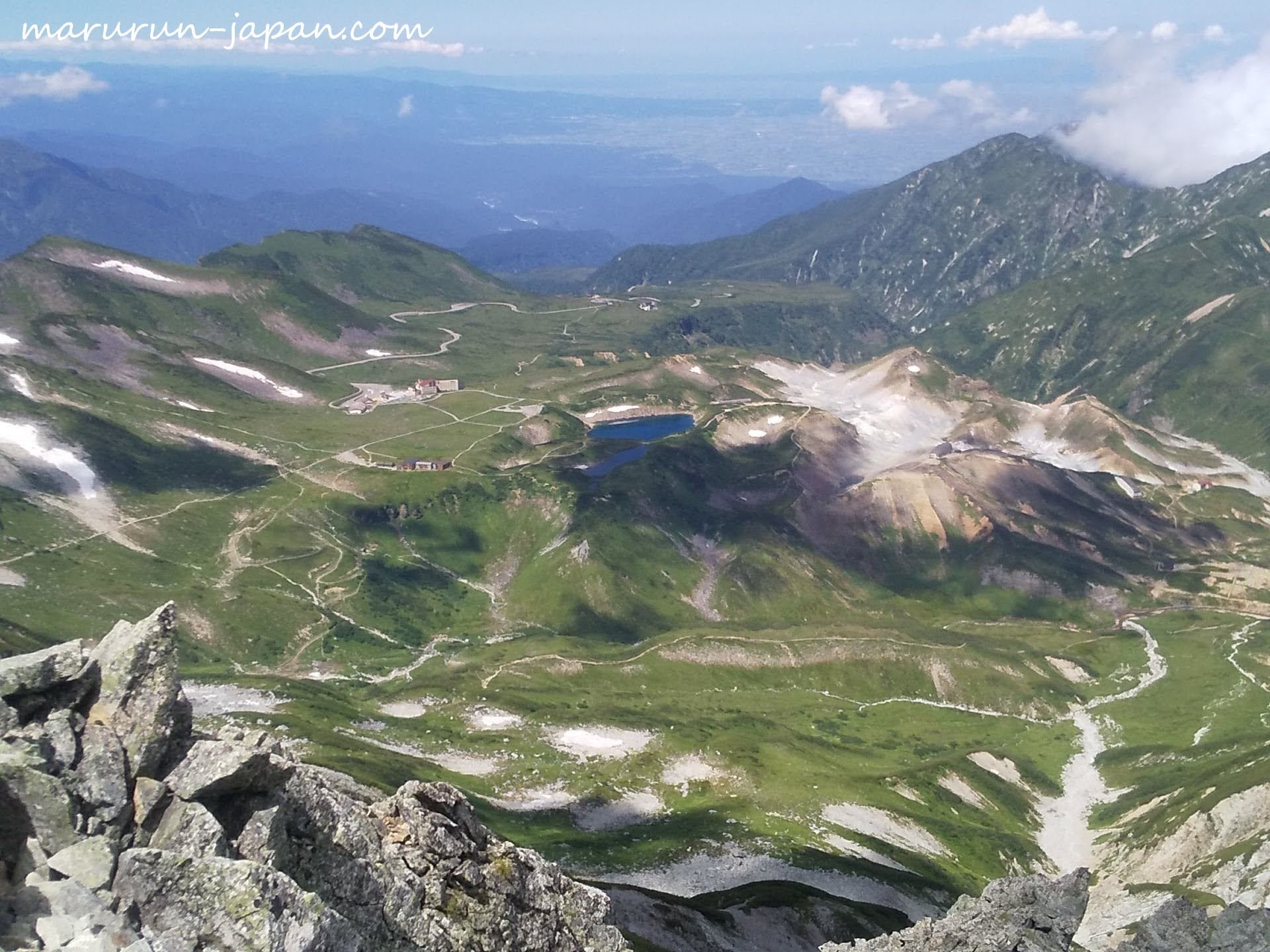
After leaving Oyama Shrine, we crossed the highest mountain, Mt. Onanji (3,015m) and Mt. Fuji-no-Oritate (2,999m) by climbing up and down the rocks and giving way to climbers coming from the opposite direction. (The beginning of August is the most popular season for climbers, so there were many people from all over Japan). Due to the fine weather, which was unusual for mountains, we could clearly see the famous Kurobe Dam in the distance from the top of both mountains, as well as Mt. Tsurugidake, which can only be climbed by advanced climbers and is highly coveted by people.
Women’s Hearts and the Weather in the Mountains
When we reached Mt. Masagodake for lunch around noon, the weather suddenly turned foggy and the temperature dropped. It started to rain as if the clear sky of a few moments ago was a lie. The weather in the mountains is so changeable, and we put on our rain clothes in a hurry and went on our way. By the time we passed Mt. Bessan in the rain, I was so physically exhausted that for a moment I regretted that I had joined the traverse tour and cursed my physical weakness. Around 2:30 p.m., we finally arrived at the second hut: Tsurugi-gozen-goya! It was almost 8 hours of walking, and we all did a great job! (By the way, the subtitle is a kind of typical analogy in Japan, which means women’s hearts and the weather in the mountains change quickly!)
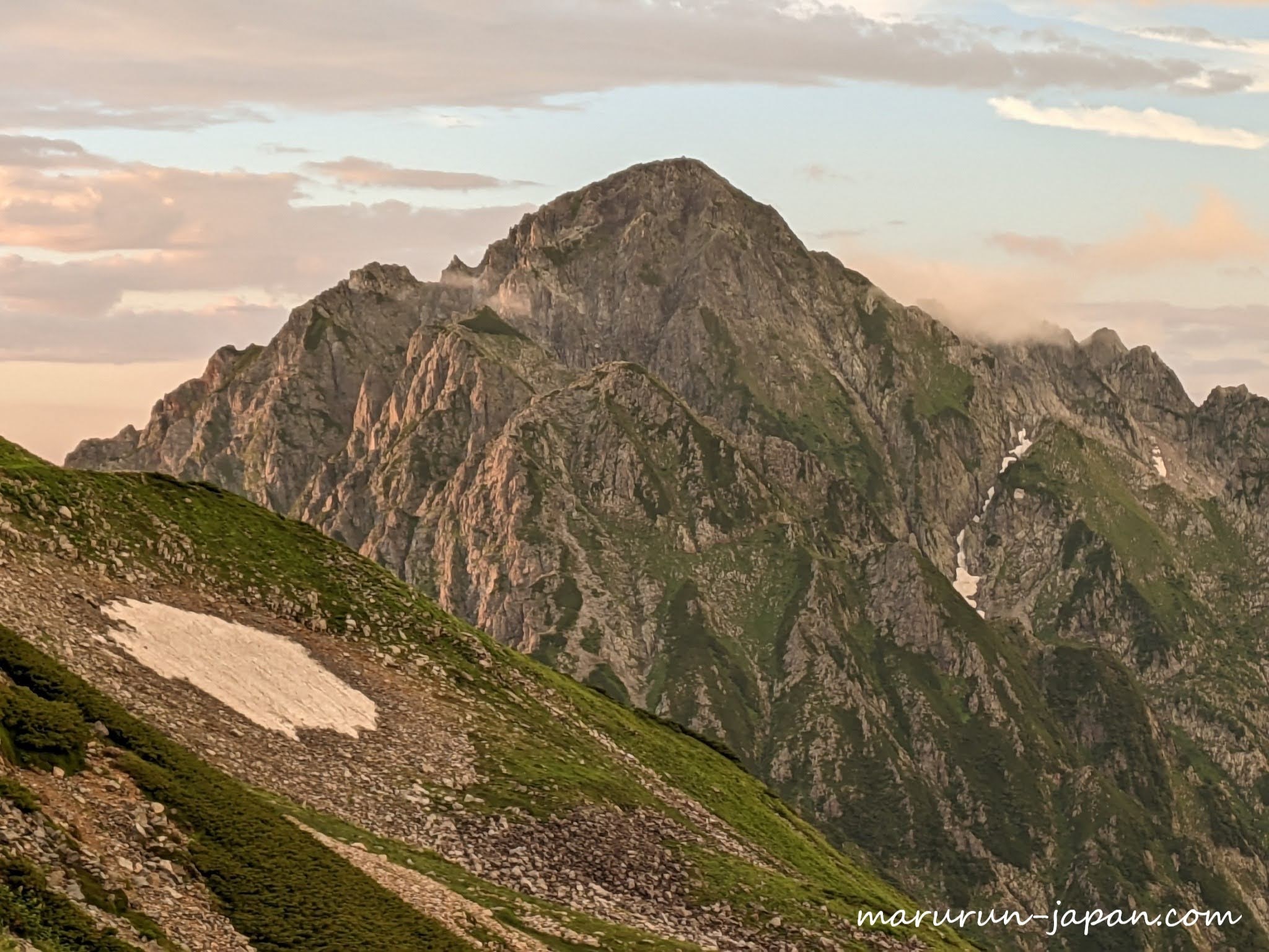
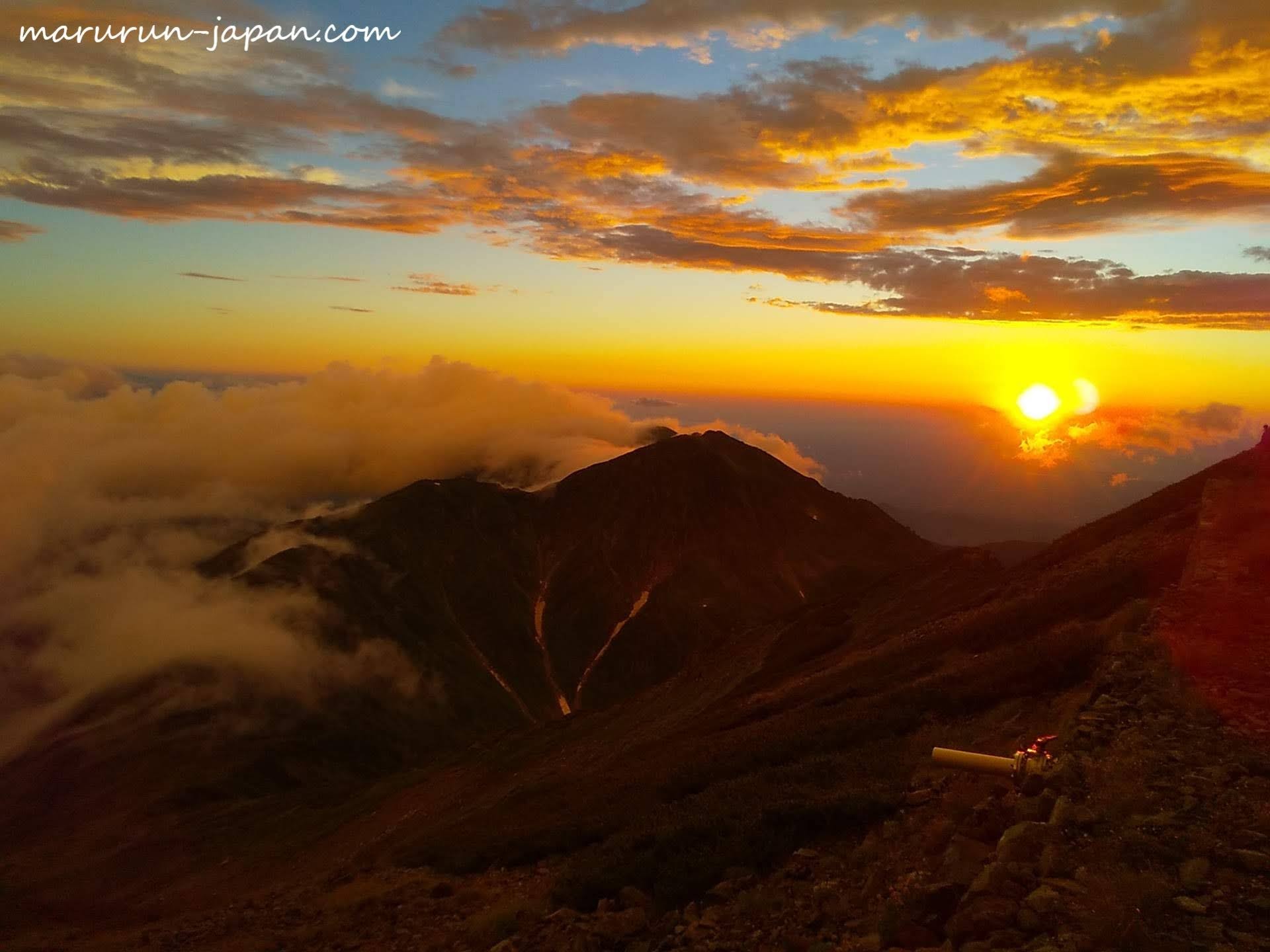
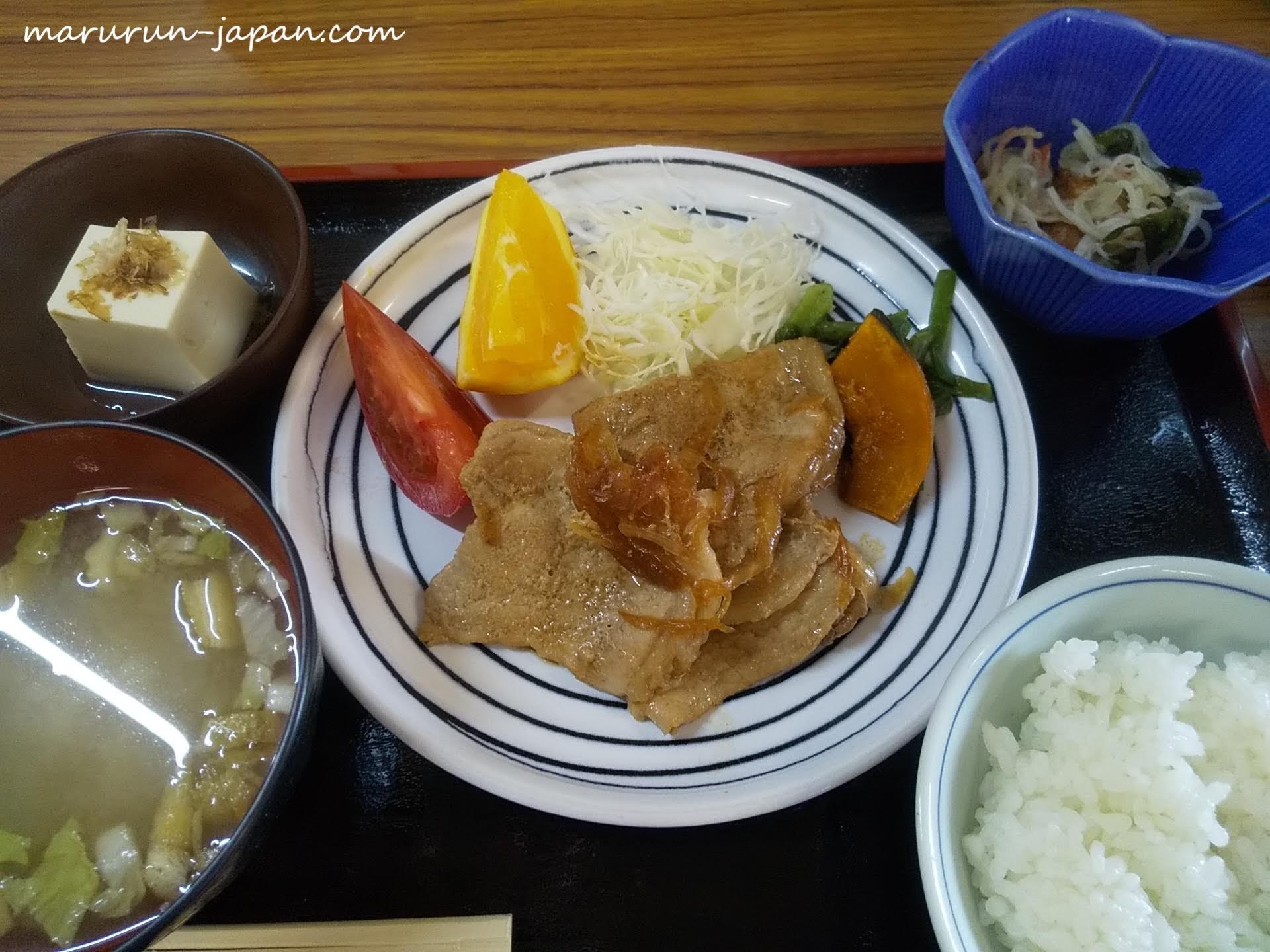
Tsurugi-gozen-goya is a kind of base camp for Mt. Tsurugidake, so it was crowded with climbers heading there, not just us. We had to share a room with 12 female climbers, and each of us was given a small space like a single futon size per person. This was still a good thing, and I heard that in the worst cases, the three of them sometimes shared one futon. Anyway, I was relieved to get there without any serious problems so far. We enjoyed the beautiful view of the sunset from the hut and a plate of dinner. I also had a good appetite because I didn’t eat enough yesterday. The lights off of the hut were early, so we had to go to bed around 8:00 p.m., even though it was a bit hard to sleep in a tiny space and with fatigue.
Hats Off to the Energetic Senior Climbers
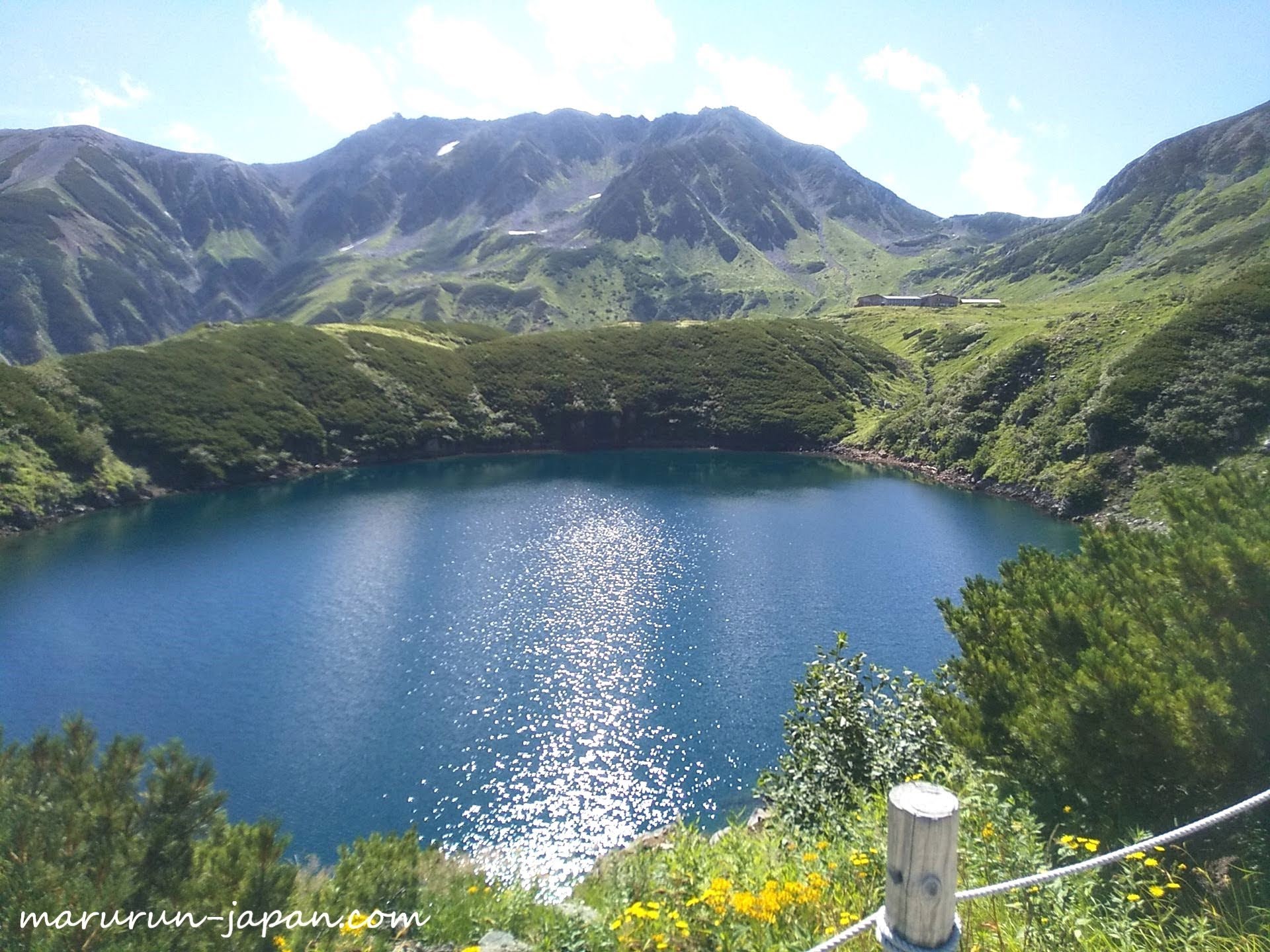
Day 3 was another sunny day and the sunrise was great. We left the hut at 5:30 a.m. after breakfast. The rocky descent to the base of the mountain continued unabated. Although you might think it would be easier to go down the mountain, in fact, accidents and injuries are more likely to occur when going down a mountain. Continuing to go down the mountain made our legs tired, and some members slipped and fell in the middle of the trail, one of them made scars and was slightly injured. So please don’t let your guard down until the end. After we reached Raichosawa Campsite, we had to climb up the stairs to the Murodo area again for a 200-meter height difference. I was really exhausted when I came to Raicho Hut and Mikurigaike Pond, I completely lost my energy to enjoy the beautiful scenery of Mikurigaike Pond and missed watching a grouse, a natural treasure of Japan! OMG!

By the way, half of the tour members consisted of seniors over 60, but I was amazed to realize how energetic they were. In contrast to my exhaustion, their footsteps were always very light. They had a good appetite and drank alcohol without worrying for those three days. According to them, some members continued to climb higher mountains periodically, like once or twice a month, so they were trained climbers and had become accustomed to the situation. The guide also told me that the best training for mountain climbing is to go to the mountains at least once a month. I would like to be such an energetic senior to enjoy what I want to do in good health!


“Bullet Climbing” is Annoying and Unsafe
Speaking of which, there was a huge number of climbers who visited Mt. Fuji this summer, not only Japanese but also foreign travelers. It was a big problem that many of them became so-called “bullet climbers”; that is, they climbed Mt. Fuji for a day trip without enough rest in order to save time and money. In addition, they came with light clothing such as just a T-shirt and short pants, which is not suitable for a mountain over 3,000 meters high. Especially around the summit, temperatures drop into the single digits at night, even in the middle of summer. Too many climbers gathered to stay in the huts, so there were many who could not move anymore due to the cold climate and fatigue or were sleeping in the middle of the trail. It’s easy to get altitude sickness if you’re not used to high altitude, as I was. Your life is the most important as you know. I really want to ask you, if you want to climb Mt. Fuji or the high mountains here in Japan, please come fully prepared for your physical as well as clothes and equipment. If not, I don’t think you deserve to climb, and I think you desecrate the mountains of Japan. Please don’t underestimate the mountains!
Anyway, enjoy climbing mountains in Japan with a well-prepared mindset if you are keen on experiencing the great nature of Japan.
References Information:
- Tateyama Kurobe Alpine Route: https://www.alpen-route.com/en/
- Alpine Route Brochure: https://www.alpen-route.com/en/wp-content/uploads/guide_book_en.pdf
- Murodo Area Map: https://www.alpen-route.com/en/wp-content/uploads/guide_map_en.pdf
- Tateyama Eco Tours: https://www.alpen-route.com/tateco/en/
- Hikes in Japan: https://hikesinjapan.yamakei-online.com/
- The Japan Alps:https://thejapanalps.com/en/

 Welcome to Marurun's Tweeting Room!