(The Japanese version follows the English version.:英語版の後に日本語版が続きます。)
Hi there! In recent years, the summer in Japan has been unbearably hot and humid, with temperatures often reaching 38°C and sometimes even exceeding 40°C. It’s becoming so extreme that I’m worried it will soon be normal for the temperature to reach 40°C every summer. Additionally, this summer has brought an unusual number of sudden downpours and thunderstorms. At this point, it feels like the best idea for July and August is to stay indoors and avoid going outside altogether. I wish the Japanese government would establish a system like Spain’s siesta, where the hottest part of the afternoon is designated as naptime. For those planning to visit Japan during the summer, please don’t underestimate the heat here. Be sure to take precautions against heatstroke, and take frequent breaks to rest and cool down during your travels.
Beppu attracts visitors from home and abroad
Now, it’s been a little while, but in late June, I visited Beppu Onsen and Kannawa Onsen in Oita Prefecture with my friend. Beppu is one of the most famous hot spring resorts in Japan, known for its abundant hot spring water, and it’s becoming increasingly popular among foreign travelers who love hot springs. The city of Beppu has eight hot spring areas, known as “Beppu Hatto” and Kannawa Onsen is one of these areas. You might have seen pictures or videos of the area with steam rising from the ground on the mountainside near the city. That’s the Kannawa Onsen area. The first time I visited Beppu was almost 30 years ago. A friend from university was from Beppu, and I visited her family’s home during a school break. Growing up in Tokyo, I hadn’t visited many of Japan’s regional cities, and that was my first time in Kyushu. I remember being amazed by the many public hot spring baths scattered around the city, experiencing a sand bath at Takegawara Onsen for the first time, and being soothed by the heat and the gentle pressure of the sand, which felt different from a sauna or a stone bath.
Returning to Beppu Onsen after 30 years, I found that while some things had remained the same, the city had changed a bit. There are now Starbucks, Nitori (the Japanese large furniture chain), and Don Quijote (The Japanese discount store chain) along the main road, which hadn’t been there before, giving the city a relatively lively atmosphere for a regional town. The area between Beppu Station and the main road had also seen the opening of some stylish shops and cafes, and locals told me that more people were moving to the area from other regions. With so many public hot spring baths in the city, and the fact that you can enter them for just 300 to 500 yen per visit, I found myself wishing I could move there and enjoy the baths every day—if only I had a job there! On our first day, we stayed at a hotel near Beppu station and visited a public bath near the hotel shortly after arriving. The entrance fee was just 250 yen. Since it was a weekday afternoon, the other people there were mainly locals, but I savored the happiness of being able to relax in a hot spring in the middle of the day. (Public baths can be a bit tricky for foreigners who don’t speak much Japanese, so I recommend checking this website in advance to learn the rules.)
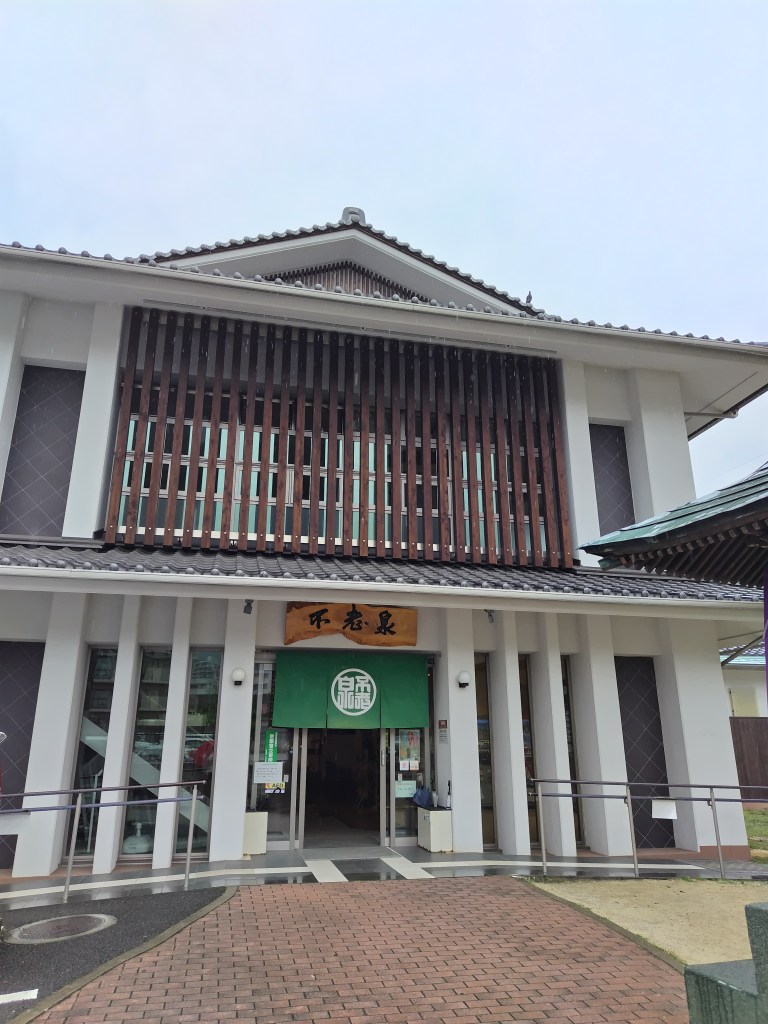
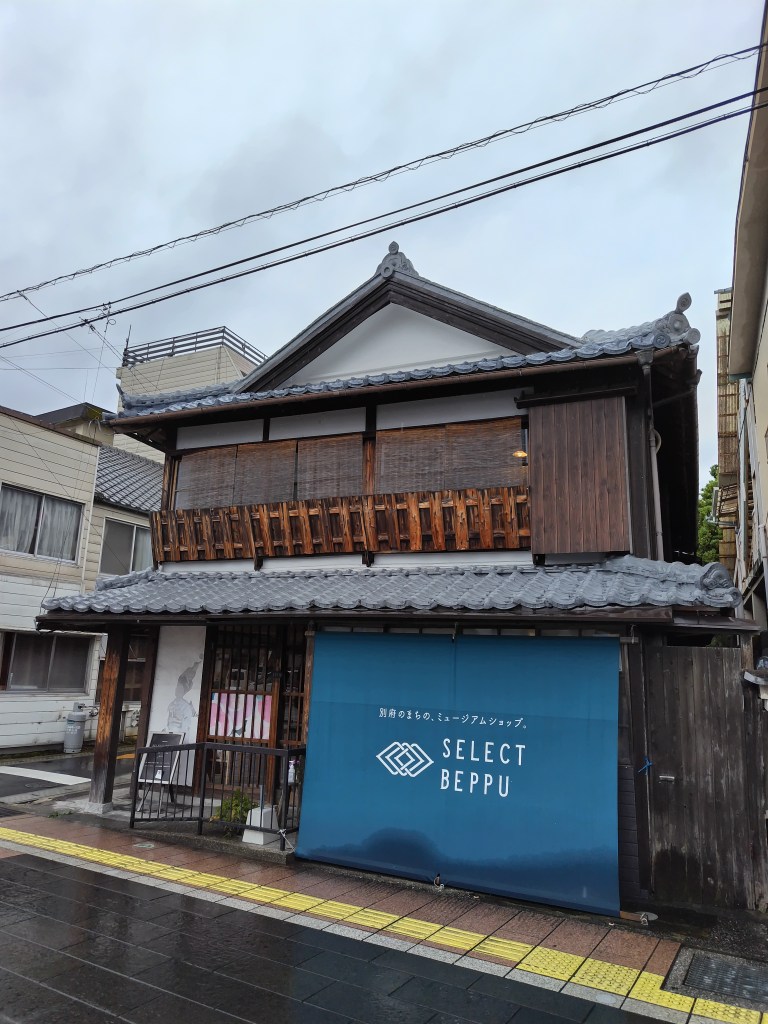
I bought some candied “zabon (one of the local citrus fruit)” as a souvenir.
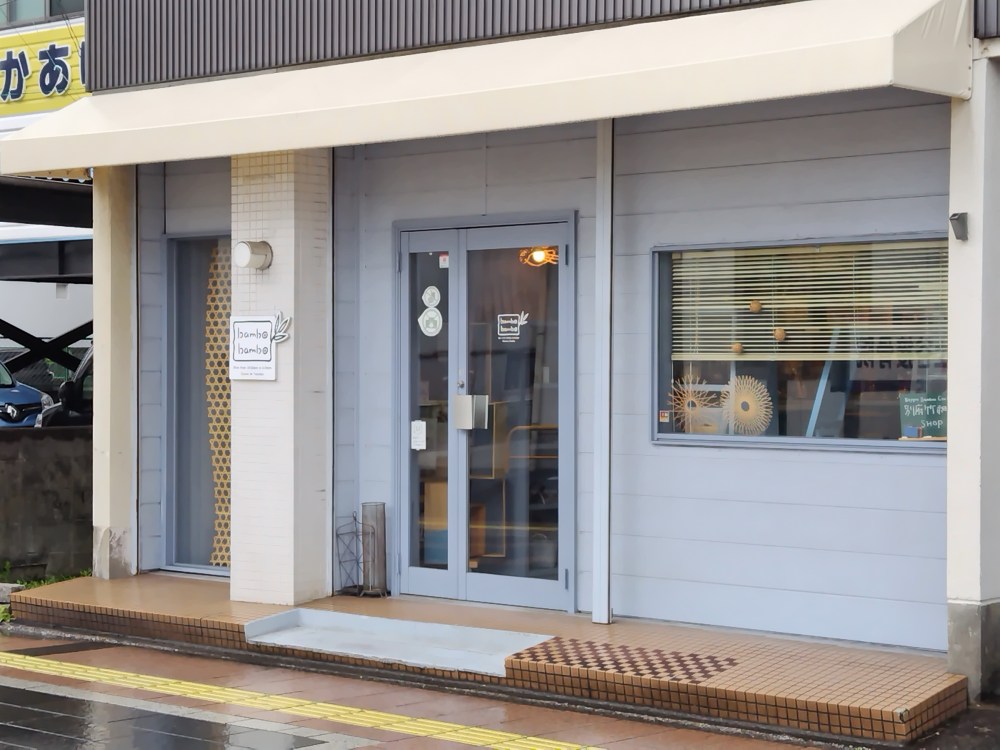
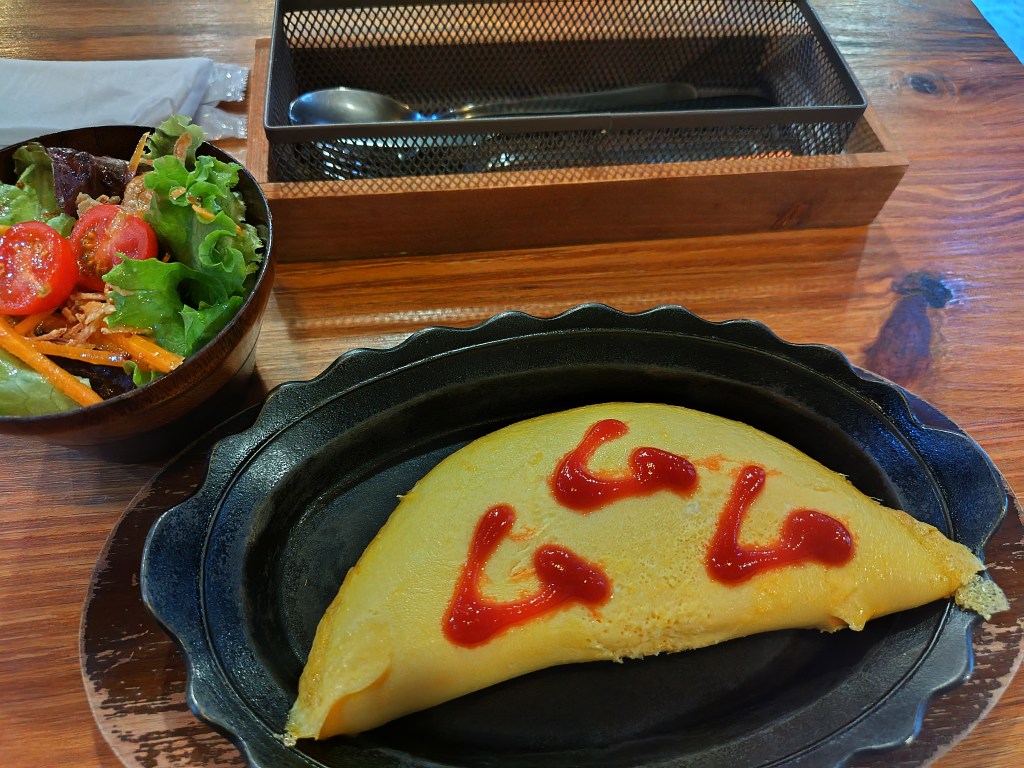
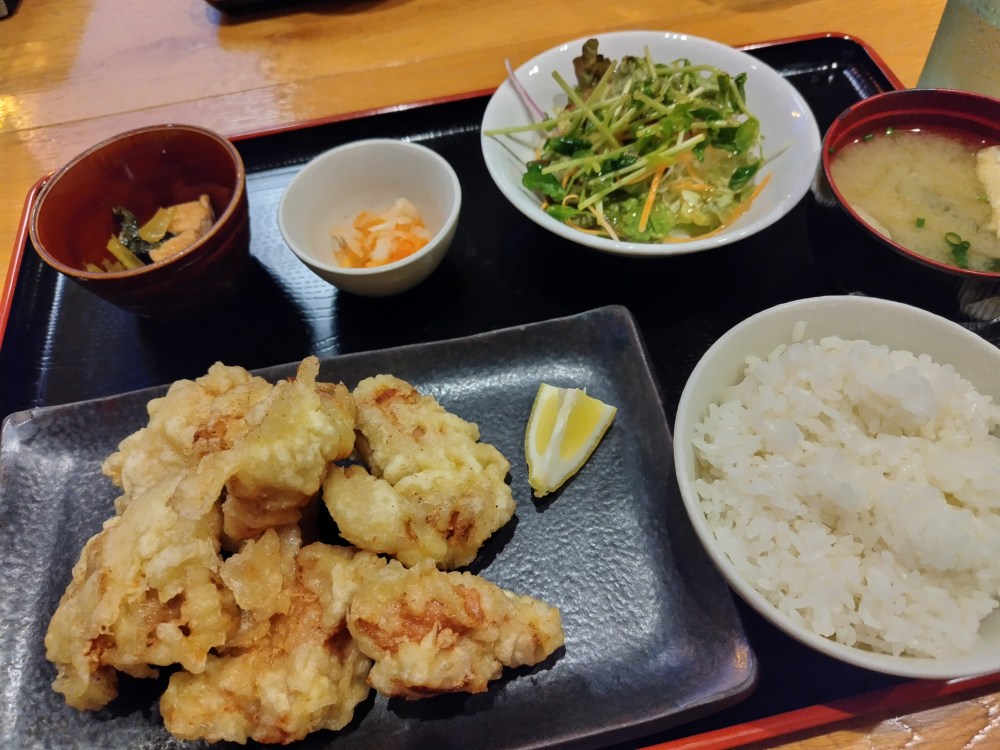
Walking around the city, I noticed a fair number of foreign tourists, which made me realize just how much inbound tourism has increased. This was something unimaginable 30 years ago. Beppu Station now has a well-equipped tourist center with multilingual brochures and staff fluent in foreign languages, so I recommend stopping by there first to gather information when you arrive in Beppu. There are also plenty of places to eat around the station, so you don’t have any trouble finding food. However, be aware that many restaurants close after lunch at 2 p.m. and don’t reopen until after 5 p.m., especially on weekdays. By the way, we enjoyed “Toriten,” a local Oita specialty, for dinner. Toriten is tempura-style chicken, but it has a lighter texture than fried chicken or Japanese Karaage, making it easier to eat.
Geothermal power of the Kannawa hot springs
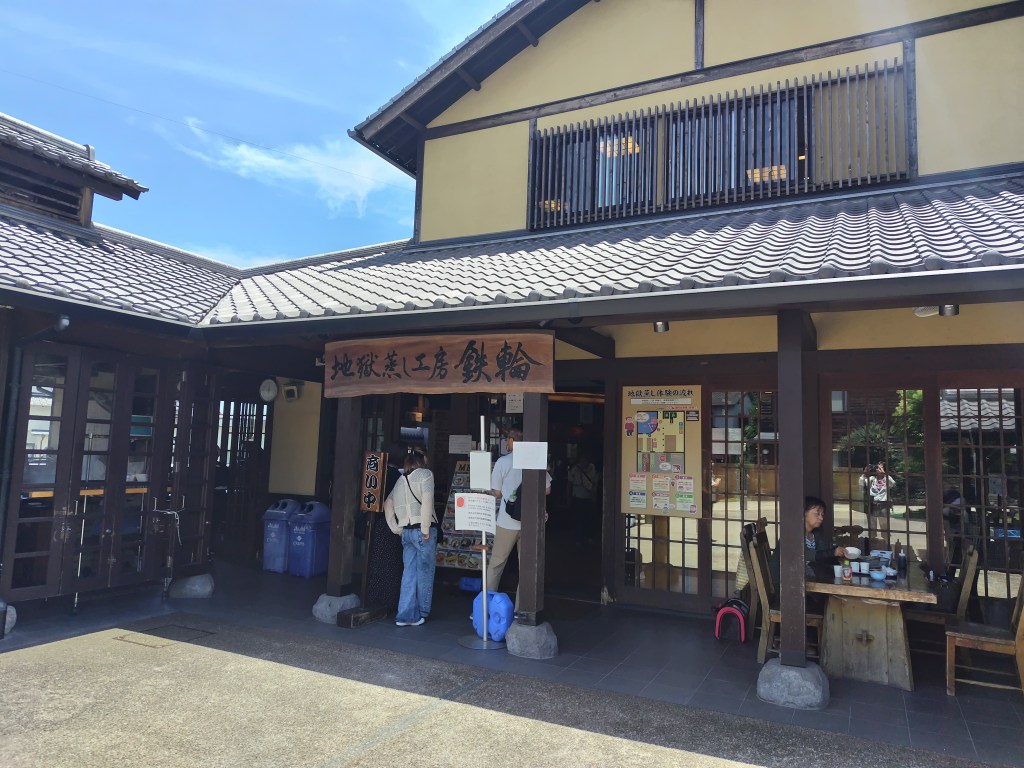
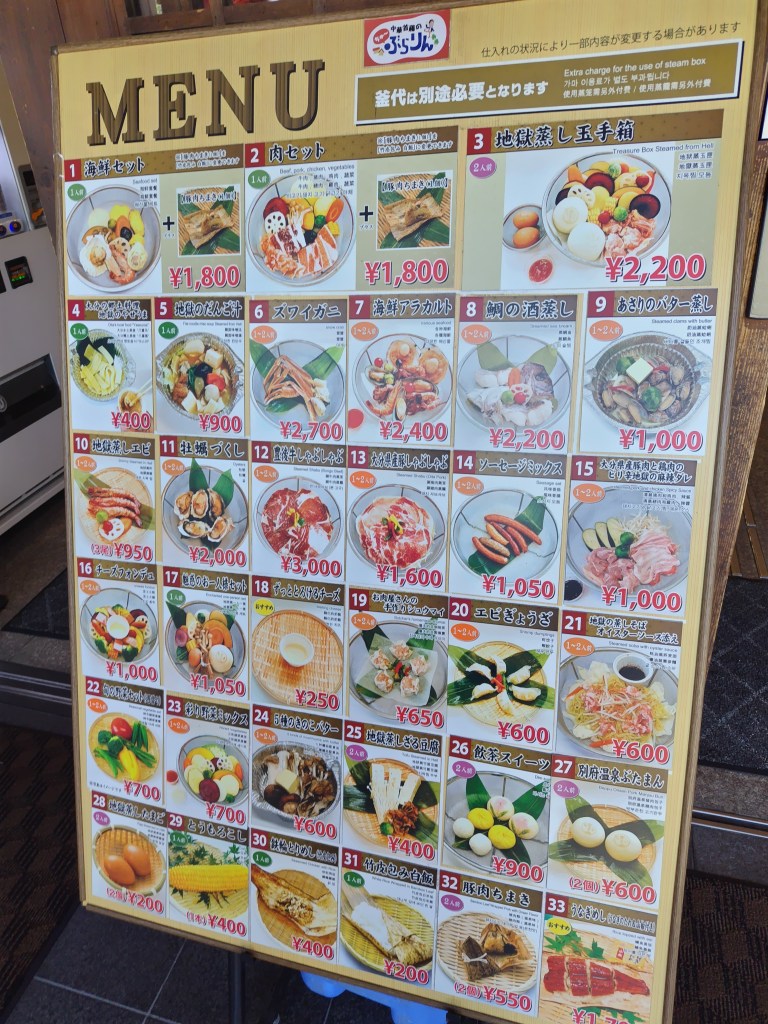
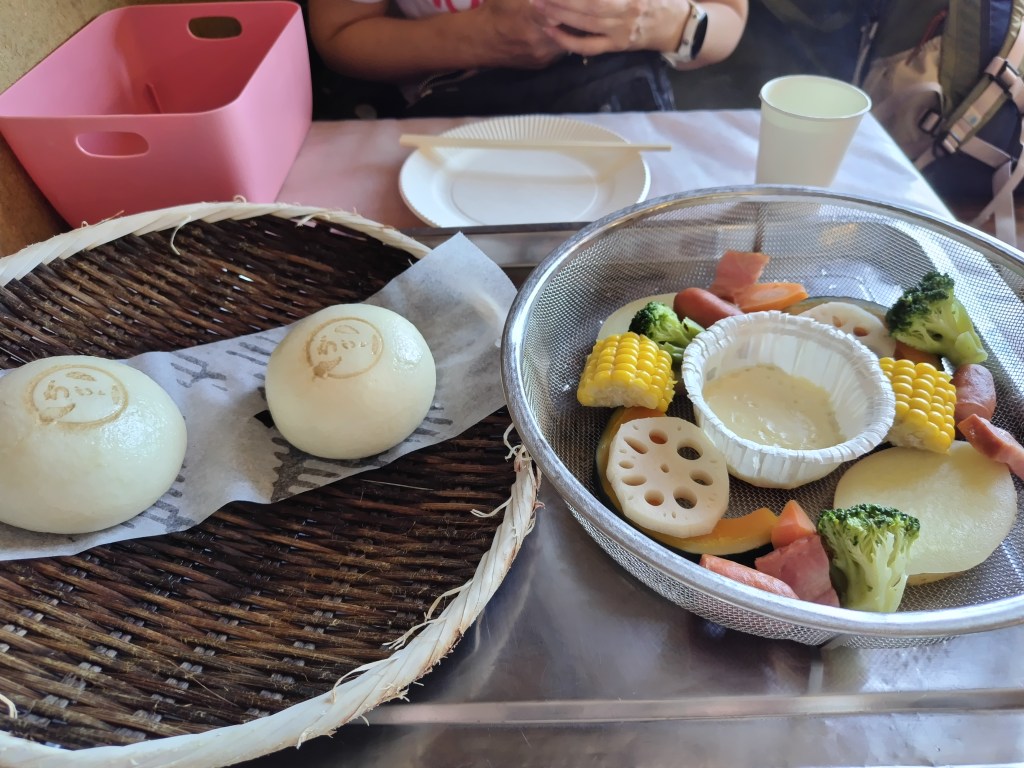
On the second day, we headed to Kannawa Onsen. After a 30-minute bus ride from Beppu Station, we arrived in the heart of Kannawa Onsen. When you arrive in this area, you can see steam rising from all over the city and feel the power of the hot springs with your own eyes. The area is also dotted with hot spring vents called ‘Jigoku’, and it is standard practice for tourists to visit multiple Jigoku of various colors. But our aim today was to eat ‘Jigoku-mushi’ (steamed food by hot spring steam) and, again, to bathe in the hot springs. Without looking at the Jigoku-meguri tour, we first head for the Jigoku-mushi Kobo Kannawa. Jigoku Mushi is a simple cooking method where vegetables and meat are steamed using high-temperature steam from the hot springs. The steam, which contains salt, seals in the umami (savory flavor) of the ingredients. You can purchase a steaming fee and a set of ingredients, and then you’re guided to a steaming pot in turn. The food is steamed in the pot for about 15 minutes, and then you can enjoy it with the seasonings provided at the table. We chose a cheese fondue set and added a pork bun, and everything was perfectly steamed and so delicious! Since it’s steamed food, it’s healthy, so you can eat a lot without feeling guilty. Although this facility is slightly more expensive as it’s geared towards tourists, I would recommend it for beginners. There are also places where you can bring your ingredients and rent just the steaming pot, so next time I might try bringing my food.

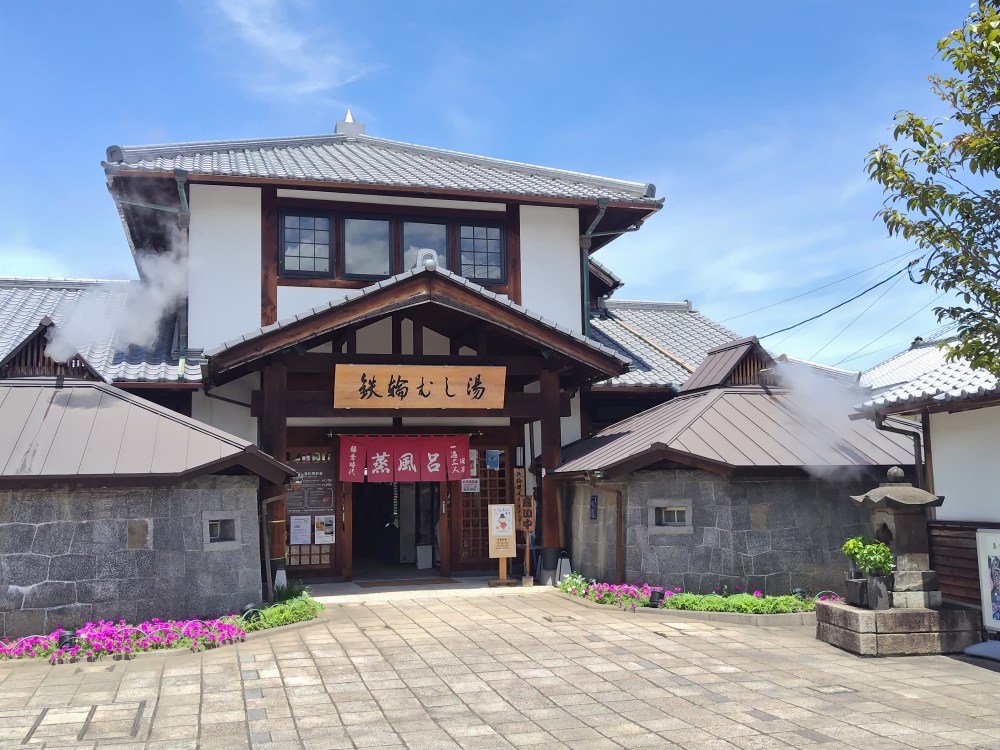
After satisfying our hunger, we moved on to “Kannawa Mushiyu; Kannawa Steam Bath.” Here, you can experience a steam bath, but since we were planning to visit “Hyotan Onsen,” a day-use hot spring, afterward, we only tried the “Foot Steam Bath” located outside. I’ve tried foot baths many times before, but this was my first time trying a foot steam bath. You put your legs into a wooden box up to your knees, as shown in the attached image, and when you close the lid, your legs are steamed by the hot steam. It’s like a sauna for your feet. The steam was quite hot, so I could only keep my legs in the box for 2–3 minutes at a time, but afterward, my legs felt light and refreshed and It was so marvelous for us to experience it for free! I’m not very good with saunas, but if I’m feeling up to it next time, I’d also like to try the steam bath. Sauna enthusiasts, I encourage you to challenge yourself with the steam bath!


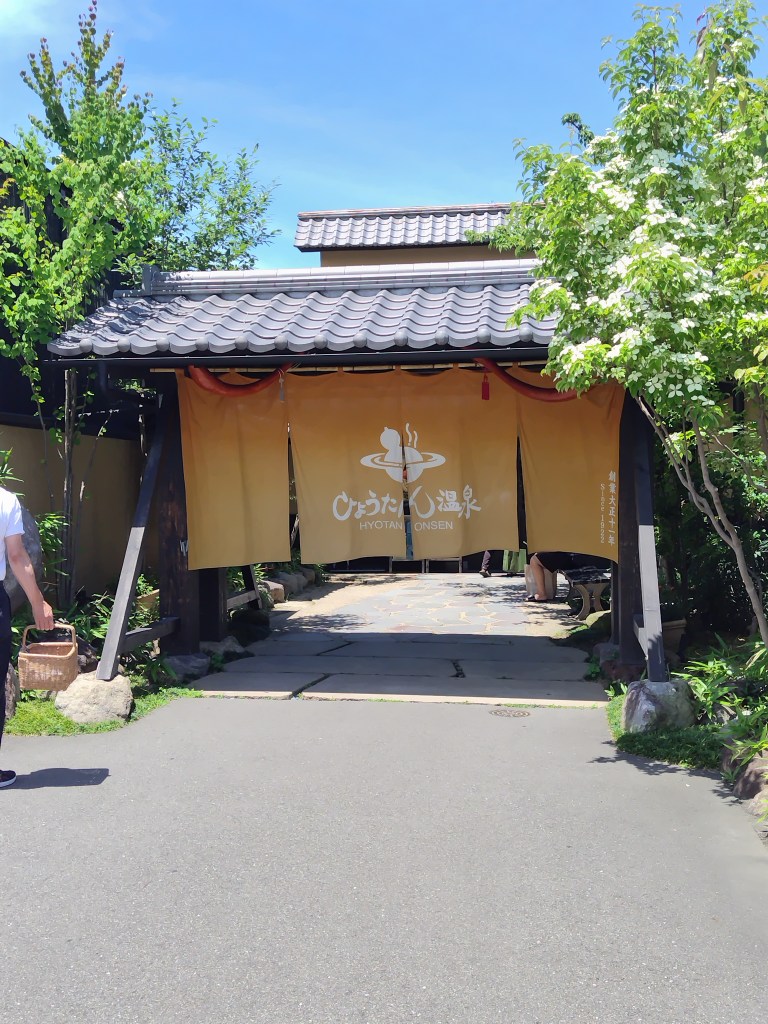
Our next destination was “Hyotan Onsen,” a hot spring facility recommended by my friend from Beppu. Since it was a weekday afternoon, the place was quiet and spacious. The facility has various types of 100% natural hot springs, including outdoor baths, and also offers dining and relaxation areas, so you can enjoy a full day there. My personal favorite was the “Waterfall Bath.” It’s a bit tricky to position your shoulders under the water stream, but the massage effect is fantastic. Can you believe that all of this is available for just a little over 1,000 yen? Even if you don’t stay overnight in Kannawa Onsen, just coming here for the day would be more than enough.
The luxury of just eating, bathing, and getting a good night’s sleep
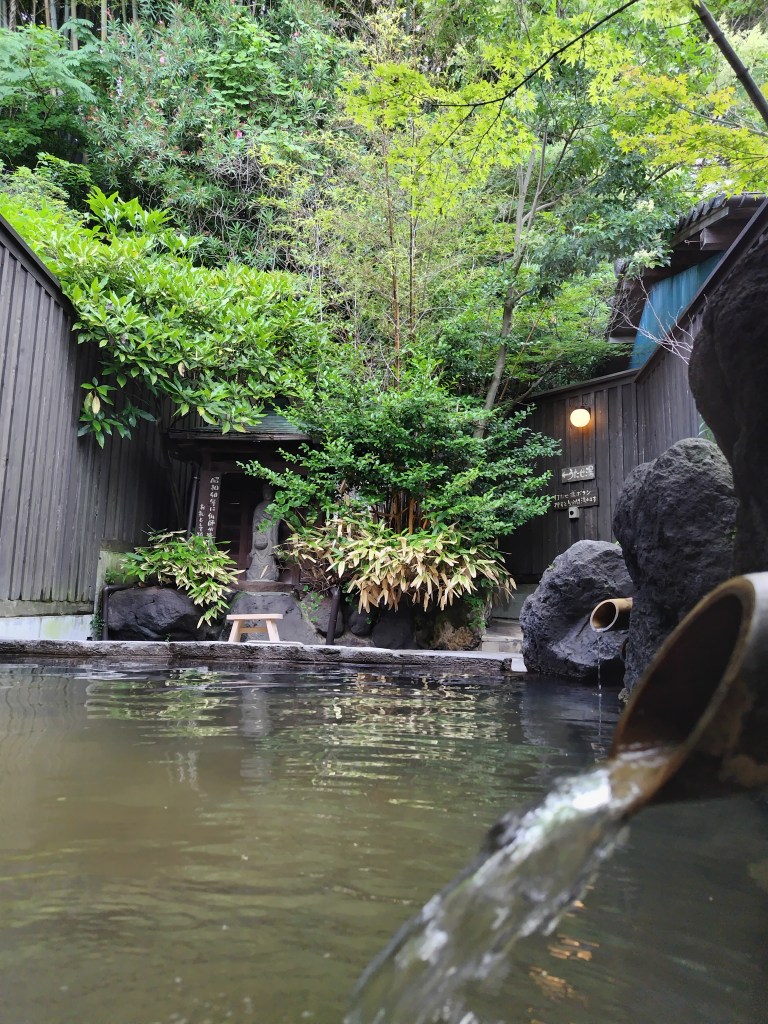
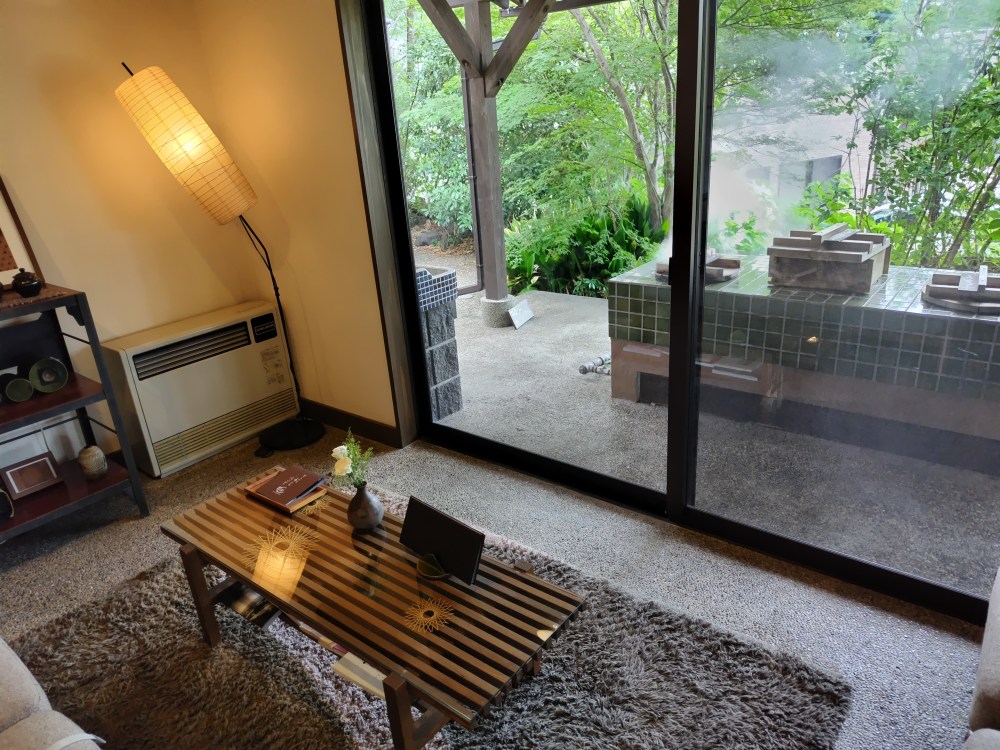
That night, we stayed at a small traditional inn called “Marugamiya” (-marugamiya-丸神屋). (They don’t have an English website, so please use an auto-translator to check it out.) The inn has been around for a long time but renovated its rooms in 2020. We stayed in the smallest room in the inn, but it was simple, clean, and had a lovely atmosphere. The real charm of this inn is the number of baths, all of which are private. You can use them whenever they’re available; just hang the “In Use” sign outside the bath and lock the door from inside to enjoy a private soak. There’s also a sand bath and a steam bath, where you wear a special yukata and share the experience with other guests. You have to cover yourself with the sand, which can be a bit tricky to get just right, but it’s wonderful for gently warming your back and waist (though be careful not to burn yourself, as the sand is hotter than you might expect). If you’ve never tried a sand bath before, I recommend visiting a place with professional staff, like Takegawara Onsen to get the full experience first.

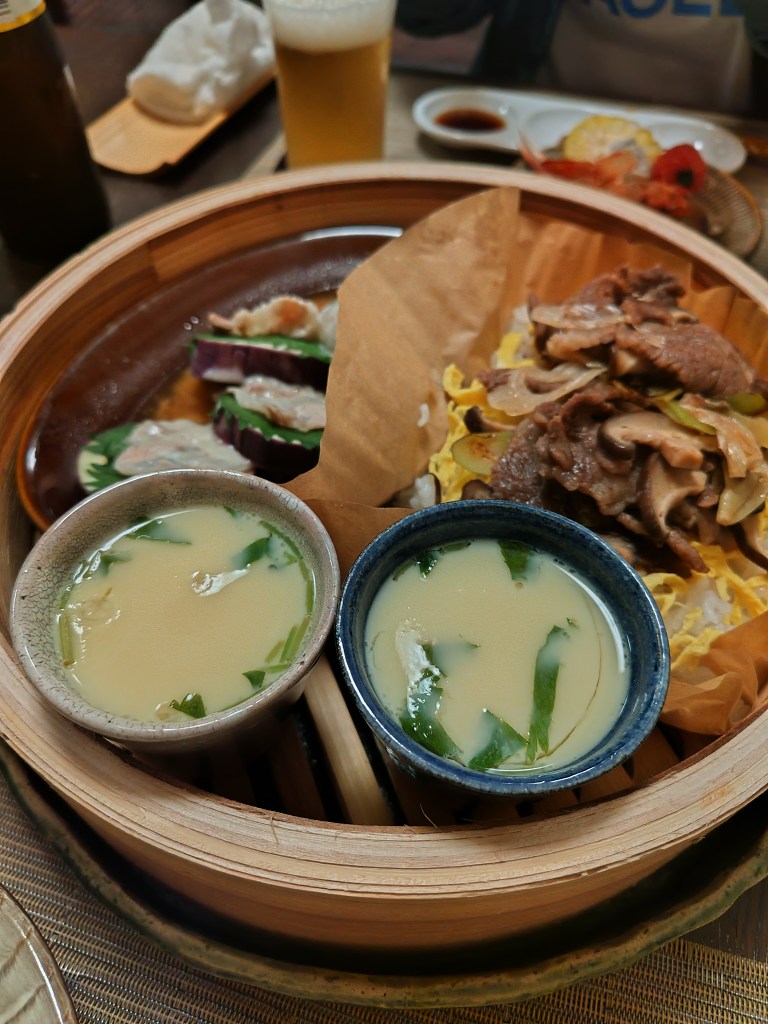
For dinner, we had a “Jigoku Mushi Kaiseki” meal along with a sashimi platter of local fish. The Kaiseki meal was served in three courses: first, steamed vegetables, followed by steamed seafood, and finally, steamed meat and rice. The portions were just right—not too much, not too little. Because it was steamed food, it felt light, and perhaps because I’d been soaking in hot springs, I found myself eating more than I expected. The sashimi was so fresh that it tasted three times better than what I usually have in Tokyo. Although we couldn’t finish all of it, the leftover sashimi was prepared as a local Oita specialty called “Ryukyu” (marinated sashimi with soy sauce and other ingredients) and served for breakfast the next morning. As for dessert, the panna cotta was already in our room’s refrigerator, so we could enjoy it later in our room—a thoughtful touch that I appreciated. The breakfast the next morning was a small Japanese set, which was perfect for me since I’m not used to eating large meals in the morning. Many hot spring inns serve too much food, and I always feel bad about leaving some of it, so I found this lighter meal just right. After all, we are likely to eat something else once we are out and about again…




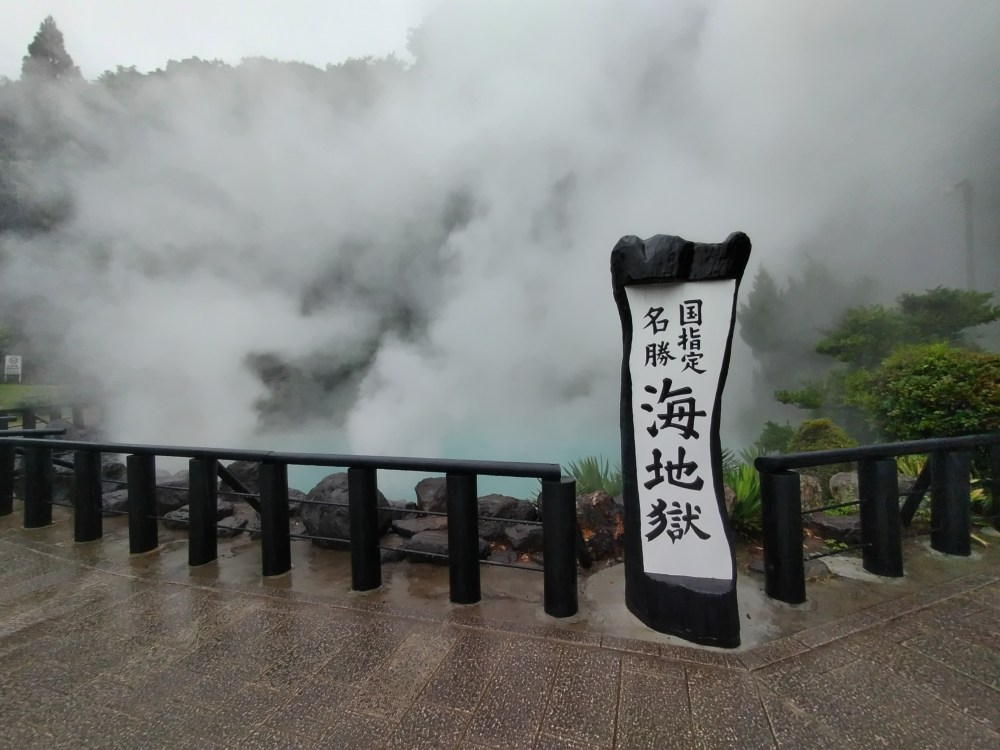
On the last day, unfortunately, it started raining in the morning. After two days of soaking in hot springs, our body was feeling a bit tired. Since we had some time, we decided to visit at least one of the “hells,” so we went to the blue “Sea Hell.” Despite the rain, there were many tourists from Korea and China at Sea Hell. Especially for Koreans, Kyushu is closer and more affordable to visit than Tokyo, which is why it’s popular. Seeing the steam rising from the blue pond brought back memories from 30 years ago when I visited this place. Although the surrounding buildings have been renovated, it was still a familiar sight. It’s funny how human memory can be so vague… There are other hells like the red “Blood Pond Hell” and the white “Shiraike Hell,” so if you have the time and interest, I recommend doing a tour of the “Beppu Hells.“

This time, we mainly visited Beppu City and Kannawa Onsen, but since Beppu has eight hot spring areas known as “Beppu Hattou,” there are still places we haven’t explored yet. Next time, I’d love to visit Myoban Onsen and Kankaiji Onsen, and since I enjoyed Kannawa Onsen, I definitely want to return. By the way, this trip was made possible by using low-cost carriers (LCCs) like Solaseed Air and Peach Aviation from Tokyo. Depending on the time of year, you can find very affordable fares, especially if you travel on weekdays or during the off-season. I encourage you to take advantage of these budget airlines and enjoy a fun trip too!
憧れの湯けむり天国~別府・鉄輪温泉~
皆さん、こんにちは。ここ数年、日本の夏は地獄のような暑さと湿気で、連日38度、時には40度を超えるくらいのも猛烈な暑さにやられています。あと数年もすると40度に達するのが当たり前になりそうで怖いです。そして、この夏はやたらとゲリラ豪雨と雷に見舞われることが多くなりました。もうこうなると、7月8月は自宅に引きこもって外に出ないのが得策。日本にもスペインのシエスタように、午後の一番暑い時間帯は昼寝の時間にするなど、政府で制度化してくれたら良いのに、と思ってしまいます。真夏に日本を旅する旅行者の皆さん、日本の夏を侮るなかれ。熱中症にはくれぐれも気を付けて、うまく途中で休んだり涼んだりしながら旅をしてくださいね。
国内外の旅行者を魅了してやまない別府
さて、少し時間が経ってしまいましたが、6月下旬に友人と大分県の別府市の鉄輪温泉に行ってきました。別府は日本国内でも最大級の湯量を誇る有名な温泉地で、温泉好きな海外旅行者にも人気の観光地になりつつあります。別府市内には別府八湯と言って、8カ所の温泉地域に分かれているのですが、鉄輪温泉はそのうちの一つになります。市内から山側に向かって湯気がもうもうと立っている光景を写真や映像で見たことがあるのでは、と思うのですが、あの辺りが鉄輪温泉地域です。私が初めて別府温泉を訪れたのはかれこれ30年近く前、大学時代の友人が別府の出身で、大学の休みの時期に彼女のご実家に遊びに行って以来です。私は生まれも育ちも東京で、日本の地方都市にはほとんど行ったことがなく、九州もその時が初上陸。市内の至る所に温泉の共同浴場があることに驚き、竹瓦温泉で砂湯を初めて体験し、サウナや岩盤浴とはまた違う熱さと砂の適度な重みに癒されたことを思い出します。
30年ぶりの再訪となった別府温泉ですが、当時の面影を残しながらも、街は少しずつ変容し、国道沿いには当時はなかったスターバックスやニトリ、ドン・キホーテなどが出来ていて、地方都市としては割と賑わっているな、という印象でした。別府駅と国道の間のエリアもおしゃれなお店やカフェなどがところどころに出来ていて、街の人の話だと別の地域からの移住者も増えてきているとのことでした。市内にこれだけ共同の温泉浴場があって、しかも1回300~500円前後で入れるなら毎日でも入りに来たい、そして仕事があれば私も移住したい!と思ってしまいますね。ちなみに、1日目は別府市内のホテルに宿泊し、別府に到着後まずはホテル近くの銭湯に行ったのですが、入泉料はなんと250円。平日の昼間だったので地元の常連客しかいませんでしたが、昼間から温泉にゆっくり入れる幸せをかみしめた瞬間でした。(共同浴場は、日本語がよく分からない外国人の方には若干ルールが分かりにくいので、こちらのウェブサイトで予め勉強してみて下さい。)
また、街を歩いていると外国人観光客とも結構すれ違うことも多く、インバウンド需要がかなり高まってることを実感しました。これは30年前では考えられなかった光景です。別府駅にはツーリストセンターも完備されていて、多言語のパンフレットも充実し、外国語の堪能なスタッフも常駐しているので、別府に着いたらまずはここに行って情報収集するのが良いのでは、と思います。食べるところも駅周辺には色々とあるので困ることはないですが、平日は特にランチタイムが14時に終わってしまい、夕方17時以降まで閉まっているお店も結構あったのでご注意を。ちなみに私たちは夕食に大分県のソウルフード「とり天」をいただきました。(「とり天」は文字通り鶏肉の天ぷらなのですが、フライドチキンとも鶏のから揚げとも食感が違い、割とあっさりと食べられます。)
街中で地熱パワーを感じる鉄輪温泉
2日目はいよいよ鉄輪温泉へ移動。別府駅から公共交通機関のバスに揺られること30分ほどで鉄輪温泉の中心地に到着です。この辺りに来ると、街中のあちらこちらから蒸気が上がっていて、温泉の威力を目でも感じることが出来ます。またこの地域には「地獄」と呼ばれる温泉噴出口が点在していて、観光客は様々な色の複数の地獄をめぐるのが定番のコースです。でも、今日の私たちの目的は「地獄蒸し」を食べることと、またもや温泉に入ること。地獄めぐりには目もくれず、まずは「地獄蒸し工房鉄輪」を目指します。「地獄蒸し」は温泉から噴出する高温の蒸気熱で野菜や肉を蒸して食べるシンプルな調理法。塩分を含む温泉蒸気で一気に蒸すので食材のうま味がぎゅっと閉じ込められるとのこと。蒸釜使用料と食材セットを購入すると、順番に蒸釜に案内されます。食材を蒸釜に入れて15分ほどで蒸し上がり、テーブルに備え付けの調味料でいただくスタイル。私たちはチーズフォンデュセットに豚まんを追加しましたが、野菜も豚まんも良く蒸されていてとっても美味しい!蒸し料理なのでヘルシーだし、たくさん食べても罪悪感ゼロです。ここは観光客向けの施設なので他の施設よりは若干割高ですが、初心者にはおススメです。中には食材を他の場所で調達して、蒸釜だけを借りられる施設もあるようなので、次回は持ち込みスタイルでも良いかもしれません。
腹ごしらえをした後は、「鉄輪蒸し湯」に移動。ここでは蒸し風呂が体験できるのですが、私たちはその後に日帰り温泉の「ひょうたん温泉」に行く予定だったので、ここは屋外に併設されている「足蒸し風呂」のみを体験しました。「足湯」はこれまに何度も入ったことがあるけれど、足蒸し風呂は初体験。添付の画像のような木の箱の中に膝頭まで足を入れ、蓋をすると足が蒸気で蒸されるシステムです。足のサウナと言ったところでしょうか。かなり蒸気の温度が高いので、連続で2~3分しか足を箱に入れ続けることはできなかったですが、蒸した後は足がふわっと軽くなったような気がしました。私はサウナがあまり得意ではないのですが、次回来た時、体調が良ければ蒸し湯の方も体験してみたいと思います。サウナ好きの方、ぜひ蒸し湯の方にチャレンジしてみてください。
次の目的地である「ひょうたん温泉」は、別府出身の友人におススメされた温泉施設です。平日の昼間だったので人も少なく、解放感満点です。施設内には露天風呂も含め、100%かけ流しの様々な種類の温泉があり、食事処や休憩室もあるので、一日楽しめます。ちなみに私のお気に入りは「滝湯」です。肩の部分にピンポイントでお湯を当てるのは難しいのですが、マッサージ効果抜群です。これだけ色々あって入浴料が1000円ちょっとって凄くないですか?鉄輪温泉に泊まらなくても、日帰りでここに来るだけでも十分だと思いました。
食べて、お風呂に入って、ぐっすり眠るだけの贅沢な時間
この日の宿泊先は小規模旅館の「-marugamiya-丸神屋」さん。昔からある旅館ですが、2020年にお部屋をリニューアルしたとのことです。私たちが泊まったのは館内で一番小さなお部屋でしたが、シンプルながら清潔感のあるとても良い雰囲気のお宿でした。なんといってもお風呂の数の多さとそのすべてが貸し切り風呂であることが魅力的。空いていればいつでも入ることができ、浴室の外に吊るされた札を「利用中」にして中から鍵をかければ独り占め状態で温泉を堪能できます。また、砂湯と蒸し湯も併設されていて、専用の浴衣を着て共同利用をするシステムです。砂は自分たちでかけ合わないといけないので、どれくらい砂をかけないといけないのか、その塩梅が難しいのですが、特に背中や腰をじんわりと温めるには最高ですね(ただし、砂が思ったよりも熱いのでやけどしないように注意が必要。また、砂湯を体験したことがない人は、一度プロの砂かけスタッフがいる温泉、例えば竹瓦温泉などに行ってみることをおススメします)。
夕食は地獄蒸し会席料理に地元のお刺身の盛り合わせをいただきました。地獄蒸し会席は3部作で、まずは野菜の蒸し物、次に海産物の蒸し物、最後にお肉とご飯の蒸し物です。食事の量も多すぎず少なすぎず、ちょうど良い感じでした。蒸し物なので背徳感がなく、温泉にも入っているせいか次々とお腹に入って行ってしまいます。お刺身の盛り合わせも、東京で食べるよりも3倍は新鮮で美味しく感じました。お刺身は量が少し多くて食べきれなかったのですが、余った分は大分名物の「りゅうきゅう」という漬けにして、翌朝の朝食に出していただきました。またデザートのパンナコッタは部屋の冷蔵庫に予め入っているので、後でお部屋で食べることが出来ましたが、こういうちょっとした気遣いも嬉しいですね。翌朝の朝食もこじんまりとした和食セットで、朝からあまりたくさん食べる習慣がない私としては、気持ち少な目な量が逆にありがたかったです。温泉旅館は食べきれなくらいの量が出てくるので、残してしまうのが申し訳ない気持ちになってしまいます。ちょっと物足りないくらいがちょうどいい、外に出ればまたきっと何か食べるんですから…。
最終日はあいにく朝から雨模様。1日目、2日目と温泉三昧で体は少々疲れ気味。時間もあることだし、ひとつぐらいは「地獄」を見ておくか、ということで青い色の「海地獄」に行ってみました。雨にも関わらず、海地獄は韓国、中国からの旅行者がたくさん来ていました。特に韓国から九州は東京に行くよりも近いので、簡単に安く来ることができるのだと思います。青い池からはもうもうと湯気が立っていて、見ているうちに30年前にもここに来たような記憶がよみがえってきました。周りの建物が新しくなっていたので最初は気づかなかったのですが、人間の記憶って曖昧なんですね…。他にも赤い池の「血の池地獄」だったり、白い色の「白池地獄」だったり、様々な地獄があるようなので、興味や時間があれば「別府地獄めぐり」をしてみてください。

 Welcome to Marurun's Tweeting Room!